
01 · In every deployment
Avoid
The depth sensor maps anything taller than about 20 mm as an obstacle, and the robot drives around it.
ARTIC · Autonomous Robot Trained In Cleaning
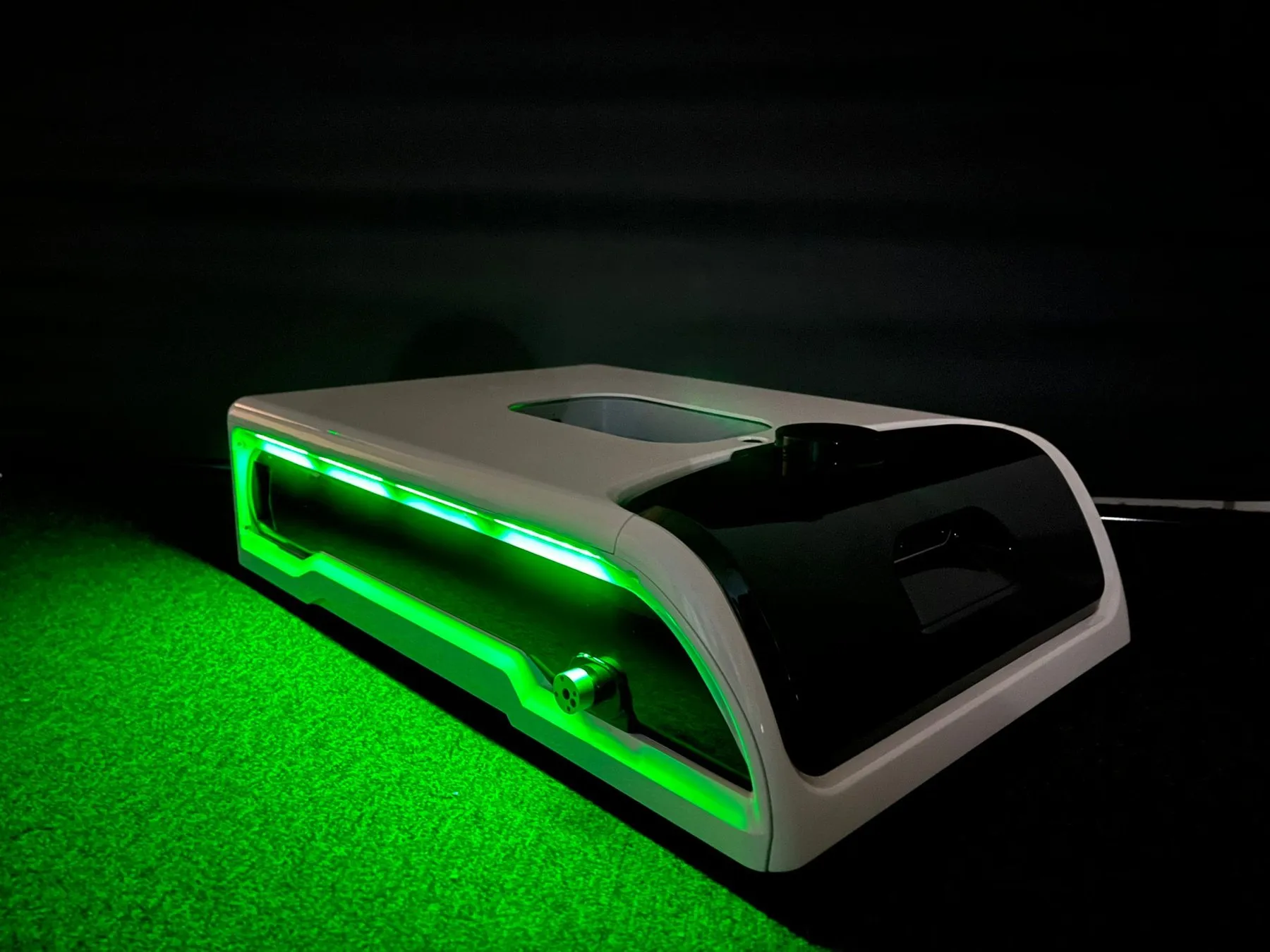
A low-profile autonomous sweeper for the floor under pallet racking and shelving. It sweeps and vacuums dry debris, docks to charge itself, steers around your stock and runs entirely on your own network.
Available now
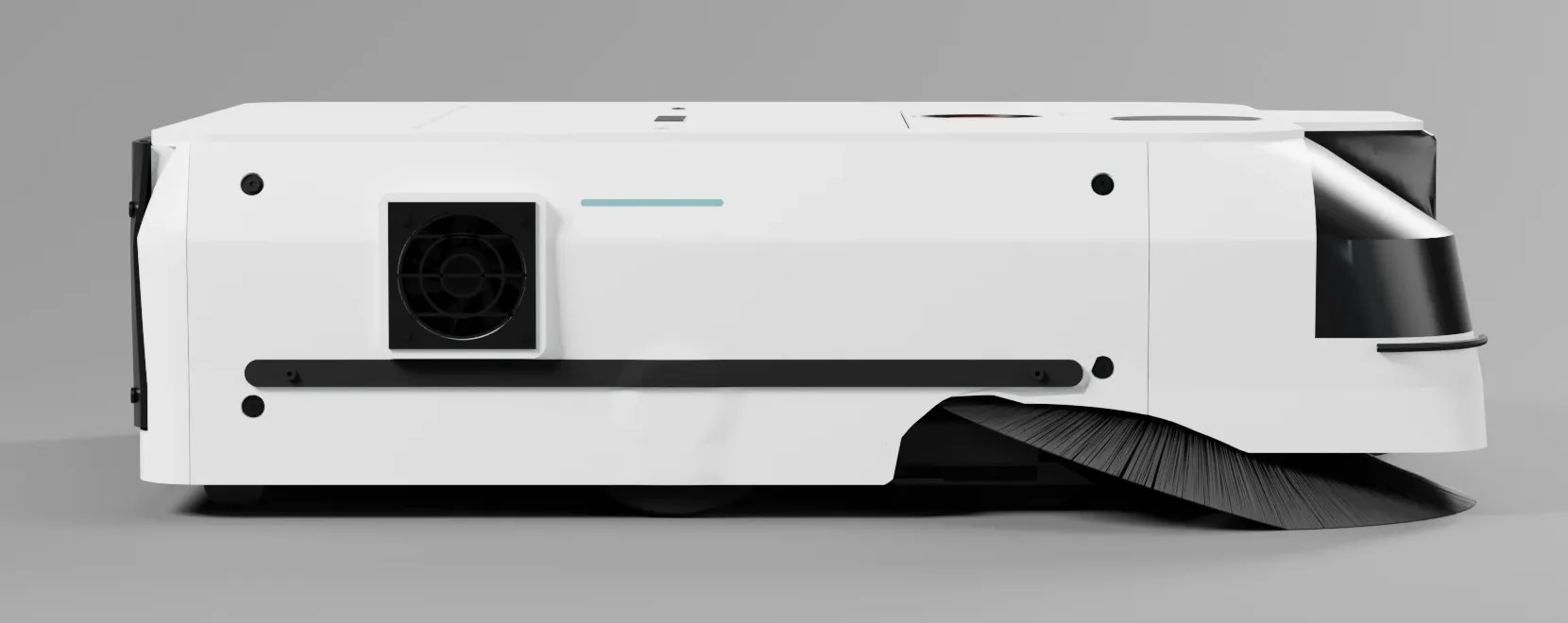
The machine
Select a number on the robot. Everything ARTIC needs to navigate and clean is on the robot.
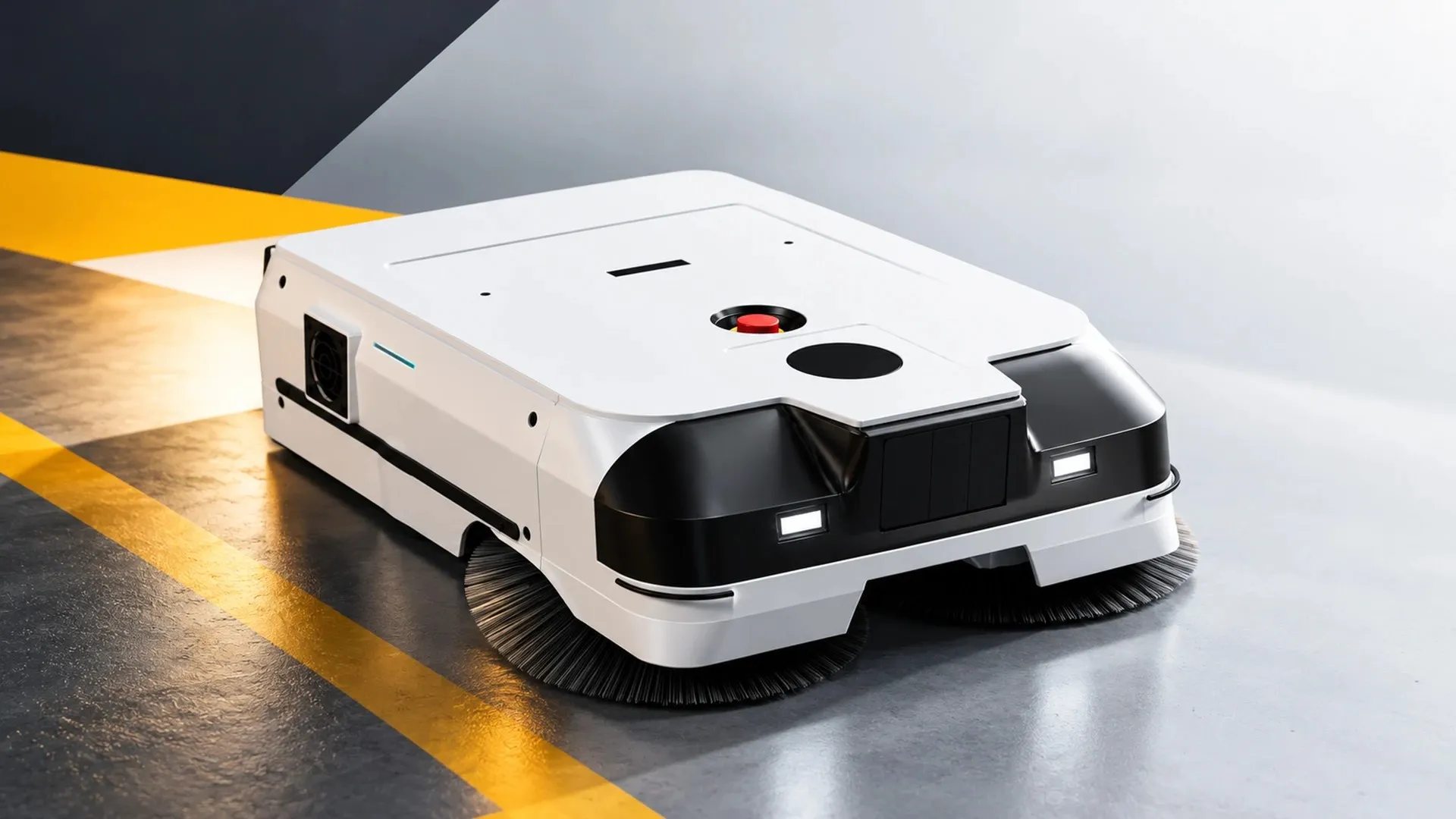
Cleaning
ARTIC V2 is a dry sweeper with integrated vacuum dust control. This is what it collects, and what it leaves alone.
| Debris | ARTIC V2 | Detail |
|---|---|---|
| Dust, grit, sand, paper, label backing, small cardboard, wood chips | Designed for | The core job: dry debris swept in by the brushes and collected in the bin. |
| Fine dust and powders | Conditional | A centrifugal vacuum motor inside the bin draws fine dust into the system as the brushes sweep. We measure and report capture rates on your floor. |
| Strapping, banding, wire, stretch and shrink film | Managed | Long strands can wrap around the roller, so long items are avoided. The roller lifts out without tools for clearing. |
| Pallet blocks, broken boards, cartons, items larger than the bin opening | Avoided | Treated as obstacles and flagged on the map for removal. |
| Liquids, oil, spills, sludge, wet or damp cardboard | Dry only | ARTIC is a dry sweeper. Wet cleaning would need a separate design. |
Charging and emptying
When its battery runs low, or its route is finished, ARTIC V2 drives back to a compact floor charger, reverses onto spring-loaded contacts and resumes its route once charged. The charger plugs into a standard mains socket and has no network connection.
Sites that want no manual bin handling can add the self-emptying station. It lifts the robot's bin and tips it into a standard wheelie bin.
| Runtime | Up to 6 hours per charge |
|---|---|
| Charge time | About 2 hours |
| Charger | Compact floor dock, standard mains socket |
| Fleet | One dock per robot by default; docks can be shared where cleaning windows are staggered |
The robot finishes its current pass and saves where it was.
It drives to its dock along the aisles you have allowed.
It reverses onto the contacts. Charging starts after the robot and dock confirm each other.
It undocks and continues the route from the saved position.
Product protection
ARTIC sweeps anything that fits under its front edge and through its bin opening. Large items cannot get in, and anything taller than about 20 mm is seen and steered around. Small, flat items are the real risk, so we deal with them in three layers.
The depth sensor maps anything taller than about 20 mm as an obstacle, and the robot drives around it.
Our team adds recognition of your own packaging. When the robot recognises a product, it stops and steers around it.
Every product it steers around is marked on the site map with its bay, position and a photo, for your team to collect.
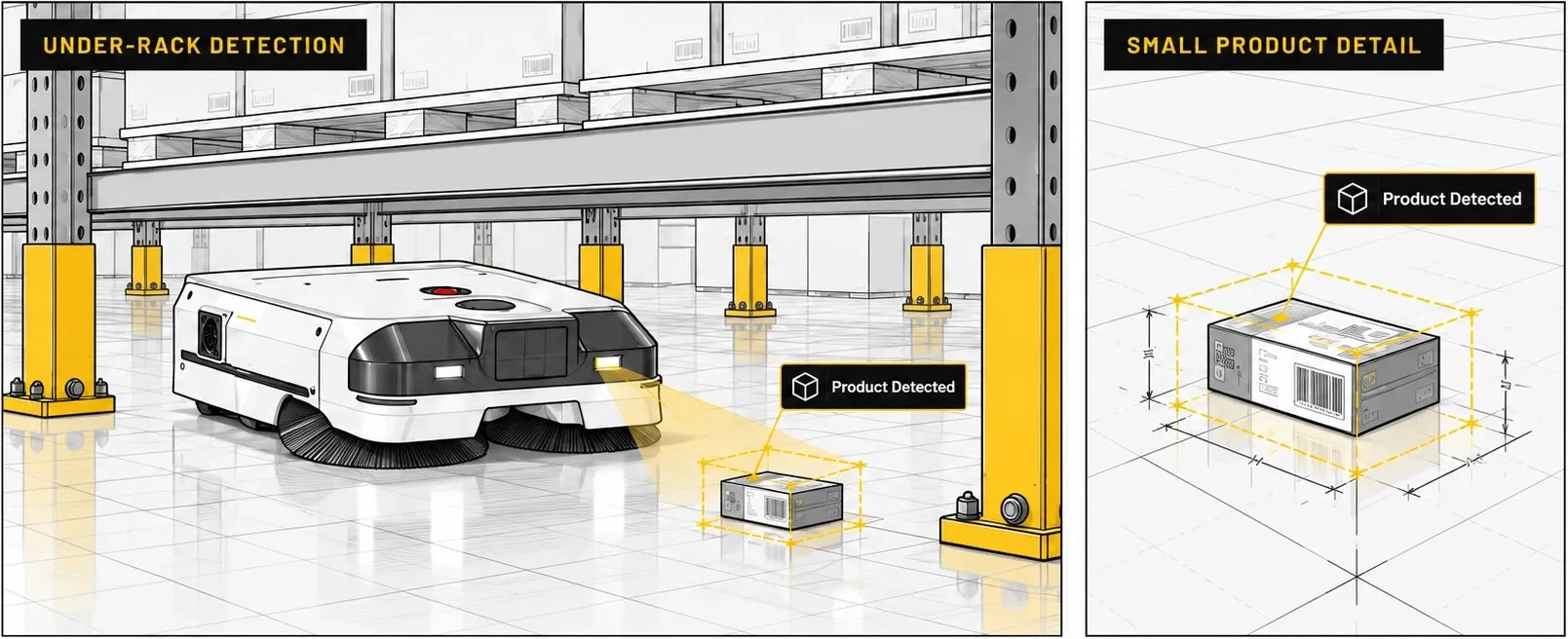
Recognition of your own packaging takes about four weeks to add and test, so it is running at go-live.
Network and security
Each robot navigates, avoids obstacles and cleans using its own onboard computer. The network carries only work orders and status. Operation, updates, support and analytics all work without an internet connection.
A dedicated VLAN and SSID on your wireless network (WPA2 or WPA3-Enterprise), firewalled from the corporate LAN. Operators reach the console through a single rule you control.
We supply a private wireless access point and the on-site server, with no link to your network at all. Operators use a console terminal on the same isolated network.
| Data | Leaves site? |
|---|---|
| Site map and layout | Never |
| Camera images | Never |
| Cleaning records | Only if you export them |
| Diagnostic bundle | Only if you send it |
| Software updates | Inbound only |
The ARTIC series
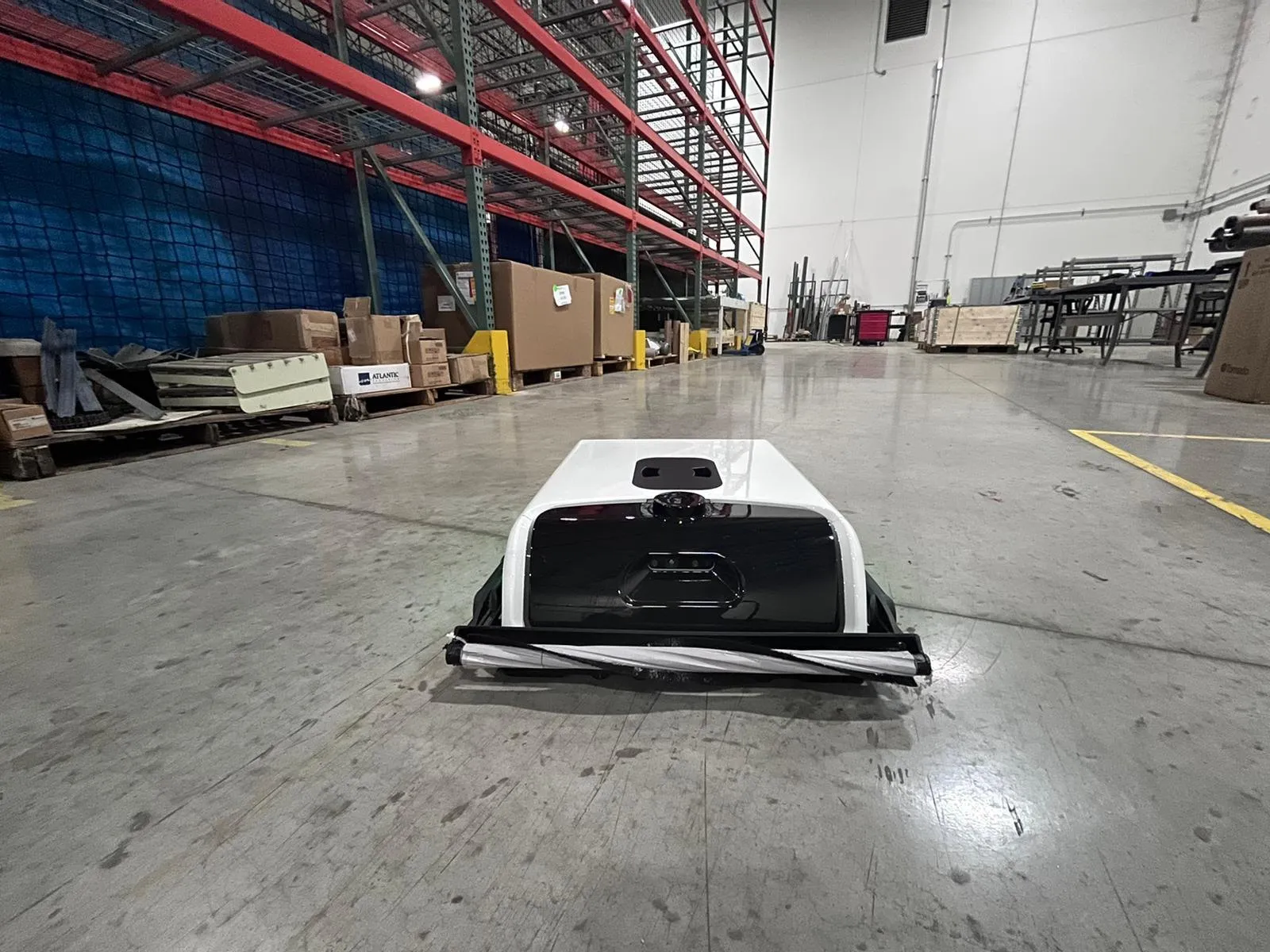
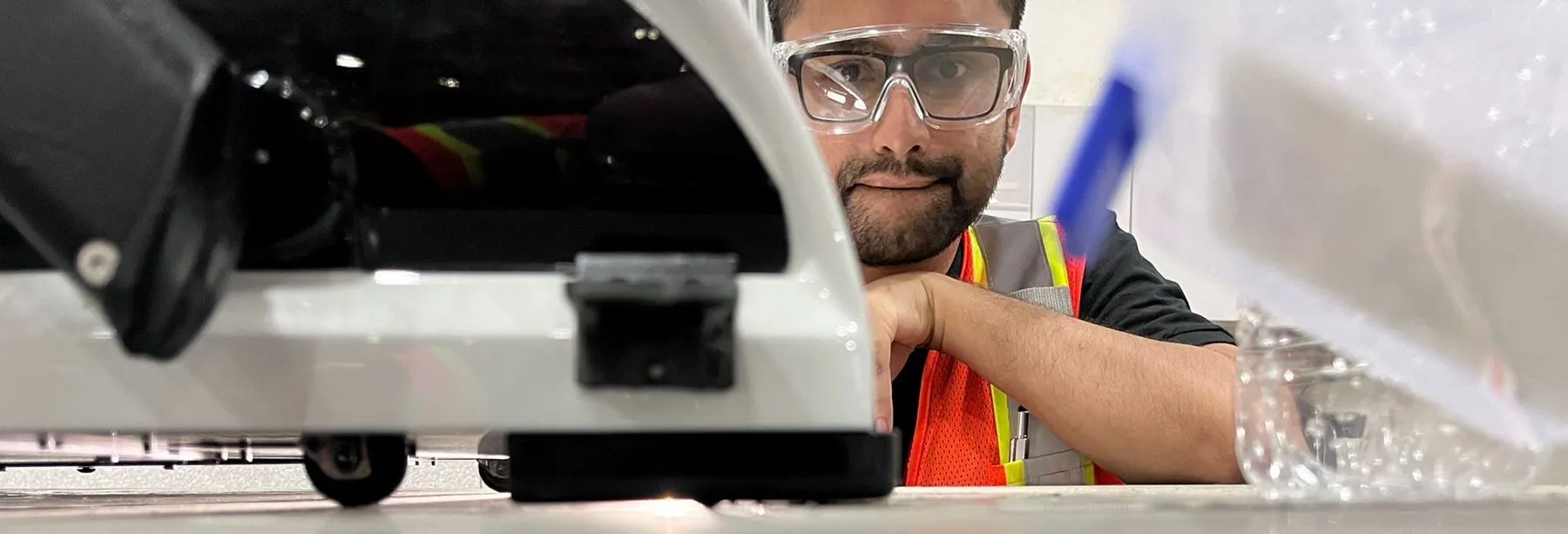
The ARTIC series was built, instrumented and deployed beneath racking at client warehouses. Those deployments showed us what a production machine needs, and ARTIC V2 is that machine.
Get started
We map your warehouse, racking and shelving, measure clearances, floors and gradients, and you approve the cleaning map before anything runs.